The Philippines needs stronger mechanisms to sustain investments in education, health, and human capital beyond political cycles, experts said at a Philippine Institute for Development Studies (PIDS) press conference.

PIDS Senior Research Fellow Valerie Gilbert Ulep said the time horizon for health and education investments can extend well beyond a political term.

“The horizon that we're [looking] at if we invest in health and education will have to happen 10 years down the line,” Ulep said, warning that short-termism can become an obstacle when decision-makers focus on immediate service indicators rather than longer-term improvements in health and human capital.

He also stressed the need to strengthen the institutional workforce responsible for planning and resource allocation.

“If hindi tayo nag-i-invest sa back-end workforce sa mga institution natin, hindi malakas yung mga agencies natin (If we do not invest in the back-end workforce in our institutions, our agencies will not be strong),” Ulep said.

Professor Dynah Avigail Basuil of the Asian Institute of Management said human capital development is an interconnected process that begins with children's health and nutrition and extends to education, workforce capabilities, and business productivity.

“Everything contributes—the health, the education, and the health of businesses,” Basuil said.

She said the same systems perspective is increasingly important as businesses confront rapid technological changes, including artificial intelligence.

“If you've got AI, what happens to the industries? What kind of capabilities [are needed] in the workforce? And then what kind of education system do we need for that?” Basuil said.

But sustaining these investments can be difficult when the government operates within shorter political cycles.

Professor Maria Victoria Raquiza of the University of the Philippines National College of Public Administration and Governance (UP-NCPAG) said the country's political cycle can create difficulties for programs and projects whose benefits take longer to materialize.

“While we understand why it's there, because it's how the system is built, and people are reelected, government officials are elected every three years. It is a condition that we must live with. It also invites a lot of pathology in our governance system,” Raquiza said.

She noted that uncertainty over whether leaders will remain in office long enough to implement long-term projects can discourage strategic thinking.

“Short term is, I think, a fundamental challenge that we must face institutionally speaking, because it's embedded in our institutional processes,” she said.

For PIDS Senior Research Fellow John Paolo Rivera, one possible response is to consider how political leaders are evaluated.

Rivera said key performance indicators (KPIs) could recognize leaders who initiate long-term projects as well as those who complete projects started by their predecessors.

“[Perhaps] part of the evaluation of our leaders would be [whether] they instituted or started some long-term projects or were they able to complete previously implemented projects,” Rivera said.

Meanwhile, Dr. Michael Caampued, president of the Philippine Society of Public Health Physicians, said, “institutional strengthening can be built on trust,” adding that trust-building can begin by establishing a shared understanding based on data and evidence.

“You can have a shared reality with data, evidence, but we also have to deepen that from experience,” Caampued said.

He added that sustained collaboration also requires principled leadership and credibility grounded in an understanding of communities’ actual conditions.

“The leaders have to have a set of principles; principled leadership is very important for accountability,” he said. “Your credibility is bound by your immersion with the reality of the people.”

The continuity challenge also takes on greater significance as the country undergoes a demographic shift.

PIDS Senior Research Fellow Michael Ralph Abrigo noted that the Philippines has moved from a relatively high fertility rate to a much lower fertility rate. The total fertility rate—the average number of children a woman is expected to have over her lifetime—has more recently fallen to about 1.7, he said.

With fewer children in each generation, Abrigo said, families and society have an opportunity to invest more in each child.

“And we know when we have fewer children, we invest more in them. And this is where my hope is coming from,” Abrigo said. “When we invest more in children, eventually, when they grow up, they'll be more capable than us.”

He said the next generation may also expect more from government and public institutions.

“That generation, I think, they'd be better than us,” he said. “They'd expect more from our government, that expect more from everyone, because we deserve to have these good institutions…we deserve a good society where we could live and flourish together.”

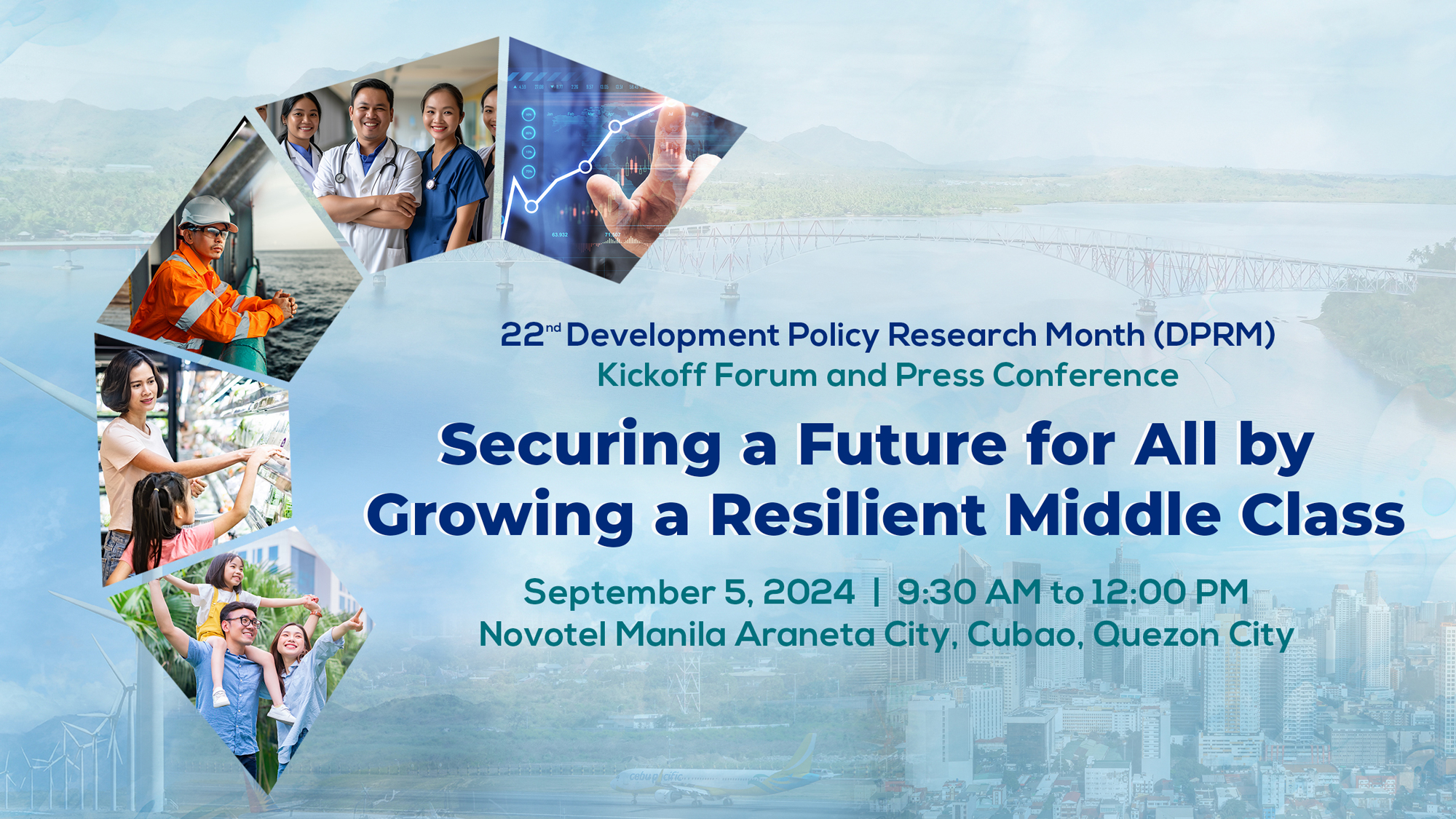
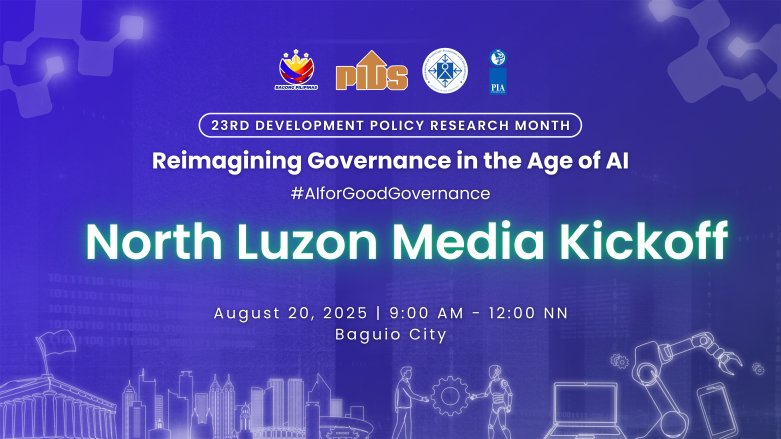
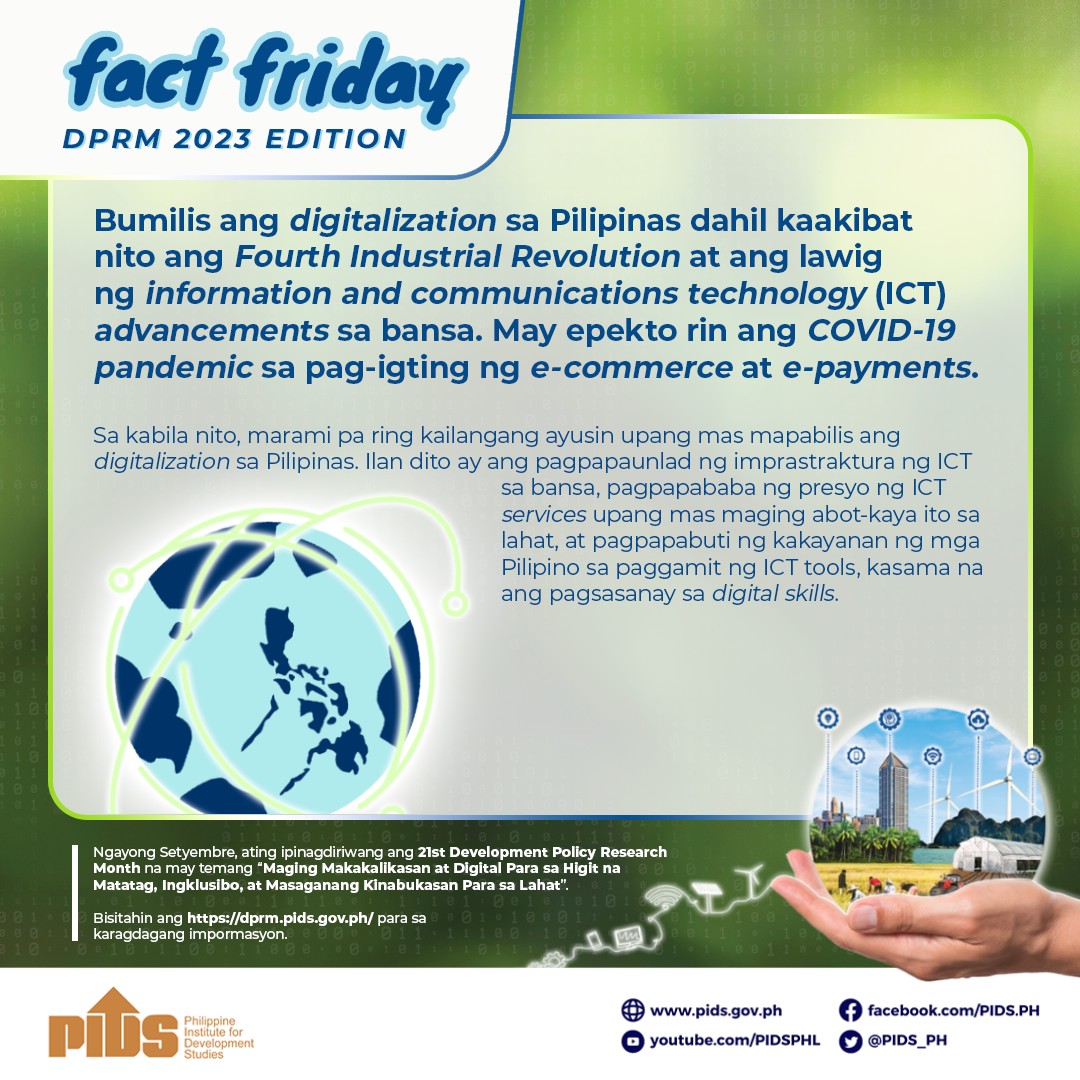
The 2026 DPRM is observed throughout September pursuant to Malacañang Proclamation No. 247 (s. 2002), with PIDS serving as the overall coordinator and convenor of the annual celebration. PIDS and its partners prepared a monthlong series of discussions on how institutions can better support human capital development and the country's broader economic transformation.

Watch the video playback of the DPRM Kick Off Press Conference and Media Awards here: https://bit.ly/pidslive090126. ### — MTQ


Main Menu

Secondary Menu